Wednesday, August 24, 2016

Arezzo


Described by Livy as one of the Capitae Etruriae (Etruscan capitals), Arezzo (Aritim in Etruscan) is believed to have been one of the twelve most important Etruscan cities—the so-called Dodecapolis, part of the Etruscan League. Etruscan remains establish that the acropolis of San Cornelio, a small hill next to that of San Donatus, was occupied and fortified in the Etruscan period. There is other significant Etruscan evidence: parts of walls, an Etruscan necropolis on Poggio del Sole (still named "Hill of the Sun"), and most famously, the two bronzes, the "Chimera of Arezzo" (5th century BC) and the "Minerva" (4th century BC) which were discovered in the 16th century and taken to Florence. Increasing trade connections with Greece also brought some elite goods to the Etruscan nobles of Arezzo: the krater painted by Euphronios ca 510 BC with a battle against Amazons (in the Museo Civico, Arezzo 1465) is unsurpassed.

Conquered by the Romans in 311 BC, Arretium became a military station on the via Cassia, the road to expansion by republican Rome into the basin of the Po. Arretium sided with Marius in the Roman Civil War, and the victorious Sulla planted a colony of his veterans in the half-demolished city, as Arretium Fidens ("Faithful Arretium"). The old Etruscan aristocracy was not extinguished: Gaius Cilnius Maecenas, whose name is eponymous with "patron of the arts", was of the noble Aretine Etruscan stock. The city continued to flourish as Arretium Vetus ("Old Arretium"), the third largest city in Italy in the Augustan period, well known in particular for its widely exported pottery manufactures, the characteristic moulded and glazed Arretine ware, bucchero-ware of dark clay and red-painted vases (the so-called "coral" vases).

Around 26-261 AD the town council of Arezzo dedicated an inscription to its patron L. Petronius Taurus Volusianus.
In the 3rd to 4th century, Arezzo became an episcopal seat: it is one of the few cities whose succession of bishops are known by name without interruption to the present day, in part because they were the feudal lords of the city in the Middle Ages. The Roman city was demolished, partly through the Gothic War and the invasion of the Lombards, partly dismantled, as elsewhere throughout Europe, and the stones reused for fortifications by the Aretines. Only the amphitheater remained.

The comune of Arezzo threw off the control of its bishop in 1098 and was an independent city-state until 1384. Generally Ghibelline in tendency, it opposed Guelph Florence. In 1252 the city founded its university, the Studium. After the rout of the Battle of Campaldino (1289), which saw the death of Bishop Guglielmino Ubertini (it), the fortunes of Ghibelline Arezzo started to ebb, apart from a brief period under the Tarlati family, chief among them Guido Tarlati, who became bishop in 1312 and maintained good relations with the Ghibelline party. The Tarlati sought support in an alliance with Forlì and its overlords, the Ordelaffi, but failed: Arezzo yielded to Florentine domination in 1384; its individual history was subsumed by that of Florence and the Medicean Grand Duchy of Tuscany. During this period Piero della Francesca worked in the church of San Francesco di Arezzo producing the splendid frescoes, recently restored, which are Arezzo's most famous works. Afterwards the city began an economical and cultural decay, which fortunately ensured that its medieval centre was preserved.

In the 18th century the neighbouring marshes of the Val di Chiana, south of Arezzo, were drained and the region became less malarial. At the end of the-century French troops led by Napoleon Bonaparte conquered Arezzo, but the city soon turned into a resistance base against the invaders with the "Viva Maria" movement, winning the city the role of provincial capital. In 1860 Arezzo became part of the Kingdom of Italy. City buildings suffered heavy damage during World War II; the Germans made a stand in front of Arezzo early in July 1944 and there was fierce fighting before the town was taken and liberated on 16 July by the British 6th Armoured Division. The Commonwealth War Graves cemetery is located to the North West of the city where 1,266 men are buried.

Pope Benedict XVI visited Arezzo and two other Italian municipalities on Sunday, May 13, 2012

Wednesday, August 10, 2016

Vibo Valentia

Vibo Valentia was originally the Greek colony of Hipponion. It was founded, probably around the late 7th century BC, by inhabitants of Locri, a principal city of the Italian Magna Graecia, south of Vibo Valentia on the Ionian Sea. Diodorus Siculus reports that the city was taken in 388 BC by Dionysius the Elder tyrant of Syracuse, who deported all the population.

Wednesday, August 03, 2016

Genoa

History

Prehistory and antiquity

The city cemetery, dating from the 6th and 5th centuries BC, testifies to the occupation of the site by the Greeks, but the fine harbor probably saw use much earlier, perhaps by the Etruscans. The ancient Ligurian city was known as Stalia (Σταλìα), so referred to by Artemidorus Ephesius and Pomponius Mela (this toponym is possibly preserved in the name of Staglieno, some 3 km (2 mi) from the coast). Ligurian Stalia was overshadowed by the powerful Marseille and Vada Sabatia, near modern Savona. Stalia had an alliance with Rome through a foedus aequum ("equal pact") in the course of the Second Punic War (218-201 BC). The Carthaginians accordingly destroyed it in 209 BC. The town was rebuilt and, after the Carthaginian Wars ended in 146 BC. it received municipal rights. The original castrum thenceforth expanded towards the current areas of Santa Maria di Castello and the San Lorenzo promontory. Trades included skins, wood, and honey. Goods were shipped to the mainland, up to major cities like Tortona and Piacenza.

Wednesday, July 27, 2016

Pescara

Even without a significant historical importance, Pescara's origins precede the Roman conquest. It was founded to be the port of Theate, Capital of the people of Marrucini, to trade with the peoples of the Orient, a supporting role that was held for centuries. The name of both the town and the river was Aternum (in Greek Άτερνος), it was connected to Rome through the Via Claudia Valeria and the Via Tiburtina. The main building was the temple of Jovis Aternium. The town was an important port for trade with the Eastern provinces of the Empire. In the Middle Ages it was destroyed by the Lombards (597).

Wednesday, July 20, 2016

Ascoli Piceno


Ascoli was founded by an Italic population (Piceni) several centuries before Rome's founding on the important Via Salaria, the salt road that connected Latium with the salt production areas on the Adriatic coast. In 268 BC it became a civitas foederata, a "federated" city with nominal independence from Rome. In 91 BC, together with other cities in central Italy, it revolted against Rome, but in 89 BC was reconquered and destroyed by Pompeius Strabo. Its inhabitants acquired Roman citizenship, following the developments and the eventual fall of the Roman Empire.

During the Middle Ages Ascoli was ravaged by the Ostrogoths and then by the Lombards of King Faroald (578). After nearly two centuries as part of the Lombard Duchy of Spoleto (593–789), Ascoli was ruled by the Franks through their vicars, but ultimately it was the bishops that gained influence and power over the city.

In 1189 a free republican municipality was established but internal strife led dramatically to the demise of civic values and freedom and to unfortunate ventures against neighboring enemies. This unstable situation opened the way to foreign dictatorships, like those of Galeotto I Malatesta (14th century), initially recruited as a mercenary (condottiero) in the war against Fermo, and Francesco Sforza. Sforza was ousted in 1482, but Ascoli was again compelled to submit to the Papal suzerainty. In 1860 it was annexed, together with Marche and Umbria, into the newly unified Kingdom of Italy.

Wednesday, July 13, 2016

Verona

The precise details of Verona's early history remain a mystery. One theory is it was a city of the Euganei, who were obliged to give it up to the Cenomani (550 BC). With the conquest of the Valley of the Po the Veronese territory became Roman (about 300 BC). Verona became a Roman colonia in 89 BC, and then a municipium in 49 BC when its citizens were ascribed to the Roman tribe Poblilia or Publicia.

Wednesday, July 06, 2016

Frosinone

The first traces of human presence around modern Frosinone date from the lower Palaeolithic (around 250,000 years ago). The earliest settlements in the area are from around 4000 years ago, including late Bronze Age remains in what is now the upper part of the city (12th-10th century BC) and 7th-6th century BC sepoltures. 21 tombs from a Volscan necropolis were found in the Frosinone centre. Frusino (as it is called in ancient Latin sources) was part of the Hernici but its inhabitants were mostly Volscans. In 306 BC the city took part in the Hernic League against Rome; defeated and sacked, it lost much of its territories to the nearby Ferentino. Later, during the Second Punic War, it was devastated by Hannibal's armies, to which it has refused to surrender.

Wednesday, June 29, 2016

Province of Pesaro and Urbino

The Province of Pesaro and Urbino is a province in the Marche region of Italy. Its capital is the city of Pesaro. It also borders the state of San Marino. The province is surrounded by San Marino and Emilia Romagna in the north, Umbria and Tuscany in the west, Ancona in the south and the Adriatic Sea on the east.

Wednesday, June 22, 2016

Aosta


Aosta was settled in proto-historic times and later became a centre of the Salassi, many of whom were killed or sold into slavery by the Romans in 25 BC. The campaign was led by Terentius Varro, who then founded the Roman colony of Augusta Praetoria Salassorum, housing 3,000 retired veterans. After 11 BC Aosta became the capital of the Alpes Graies ("Grey Alps") province of the Empire. Its position at the confluence of two rivers, at the end of the Great and the Little St Bernard Pass, gave it considerable military importance, and its layout was that of a Roman military camp.

After the fall of the Western Empire, the city was conquered, in turn, by the Burgundians, the Ostrogoths, and the Byzantines. The Lombards, who had annexed it to their Italian kingdom, were expelled by the Frankish Empire under Pepin the Short. Under his son, Charlemagne, Aosta acquired importance as a post on the Via Francigena, leading from Aachen to Italy. After 888 AD it was part of the renewed Kingdom of Italy under Arduin of Ivrea and Berengar of Friuli.

In the 10th century Aosta became part of the Kingdom of Burgundy. After the fall of the latter in 1032, it became part of the lands of Count Humbert I of the House of Savoy.

Wednesday, June 15, 2016

Vercelli

Vercellae (Vercelum) was the capital of the Libici or Lebecili, a Ligurian tribe; it became an important municipium, near which Gaius Marius defeated the Cimbri and the Teutones in the Battle of Vercellae in 101 BCE.

The imperial magister militum Flavius Stilicho annihilated the Goths there 500 years later. It was half ruined in St. Jerome's time (olim potens, nunc raro habitatore semiruta (1, 3.1)). After the Lombard invasion it belonged to the Duchy of Ivrea. From 885 it was under the jurisdiction of the prince-bishop, who was a Count of the Empire.

Wednesday, June 08, 2016

Cesena

Cesena was originally an Umbrian or Etruscan town, later known as Caesena. After a brief spell under Gaulish rule, it was taken over by Romans in the 3rd century BC. It was a garrison town of strategic importance which was destroyed in the wars between Gaius Marius and Sulla. Pliny mentions the wines of Cesena as among the best.

Wednesday, May 25, 2016

Perugia

Perugia was an Umbrian settlement but first appears in written history as Perusia, one of the 12 confederate cities of Etruria; it was first mentioned in Q. Fabius Pictor's account, utilized by Livy, of the expedition carried out against the Etruscan League by Fabius Maximus Rullianus in 310 or 309 BC. At that time a thirty-year indutiae (truce) was agreed upon; however, in 295 Perusia took part in the Third Samnite War and was reduced, with Volsinii and Arretium (Arezzo), to seek for peace in the following year.

Wednesday, May 18, 2016

Ancona


Ancona was founded by Greek settlers from Syracuse about 387 BC, who gave it its name: Ancona stems from the Greek word Αγκων, meaning "elbow"; the harbour to the east of the town was originally protected only by the promontory on the north, shaped like an elbow. Greek merchants established a Tyrian purple dye factory here. In Roman times it kept its own coinage with the punning device of the bent arm holding a palm branch, and the head of Aphrodite on the reverse, and continued the use of the Greek language.

When it became a Roman colony is uncertain. It was occupied as a naval station in the Illyrian War of 178 BC. Julius Caesar took possession of it immediately after crossing the Rubicon. Its harbour was of considerable importance in imperial times, as the nearest to Dalmatia, and was enlarged by Trajan, who constructed the north quay with his Syrian architect Apollodorus of Damascus. At the beginning of it stands the marble triumphal arch with a single archway, and without bas-reliefs, erected in his honour in 115 by the Senate and Roman people.

Ancona was successively attacked by the Goths, Lombards and Saracens between the 3rd and 5th centuries, but recovered its strength and importance. It was one of the cities of the Pentapolis of the Roman Exarchate of Ravenna in the 7th and 8th centuries. In 840, Saracen raiders sacked and burned the city. After Charlesmagne's conquest of northern Italy, it became the capital of the Marca di Ancona, whence the name of the modern region. After 1000, Ancona became increasingly independent, eventually turning into an important maritime republic (together with Gaeta, Trani and Ragusa, it is one of those not appearing on the Italian naval flag), often clashing against the nearby power of Venice. An oligarchic republic, Ancona was ruled by six Elders, elected by the three terzieri into which the city was divided: S. Pietro, Porto and Capodimonte. It had a coin of its own, the agontano, and a series of laws known as Statuti del mare e del Terzenale and Statuti della Dogana. Ancona was usually allied with Ragusa and the Byzantine Empire. In 1137, 1167 and 1174 it was strong enough to push back the forces of the Holy Roman Empire. Anconitan ships took part in the Crusades, and their navigators included Cyriac of Ancona. In the struggle between the Popes and the Holy Roman Emperors that troubled Italy from the 12th century onwards, Ancona sided with the Guelphs.

Trade routes and warehouses of the maritime republic of Ancona
Differently from other cities of northern Italy, Ancona never became a seignory. The sole exception was the rule of the Malatesta, who took the city in 1348 taking advantage of the black death and of a fire that had destroyed many of its important buildings. The Malatesta were ousted in 1383. In 1532 it definitively lost its freedom and became part of the Papal States, under Pope Clement VII. Symbol of the papal authority was the massive Citadel. Together with Rome, and Avignon in southern France, Ancona was the sole city in the Papal States in which the Jews were allowed to stay after 1569, living in the ghetto built after 1555.

In 1733 Pope Clement XII extended the quay, and an inferior imitation of Trajan's arch was set up; he also erected a Lazaretto at the south end of the harbour, Luigi Vanvitelli being the architect-in-chief. The southern quay was built in 1880, and the harbour was protected by forts on the heights. From 1797 onwards, when the French took it, it frequently appears in history as an important fortress. Ancona entered the Kingdom of Italy when Christophe Léon Louis Juchault de Lamoricière surrendered here on 29 September 1860, eleven days after his defeat at Castelfidardo.

On 23 May 1915, Italy entered World War I and joined the Entente Powers; in response the Austro-Hungarian Navy attacked Ancona, causing extensive damage and killing several dozen people.

During World War II, in July 1944, the city was taken by the Polish II Corps as part of an Allied operation to gain access to a seaport closer to the Gothic Line in order to shorten their lines of communication for the advance into northern Italy.

Wednesday, May 11, 2016

Verbano-Cusio-Ossola

Verbano-Cusio-Ossola is the northernmost province in the Italian region of Piedmont. It was created in 1992 through the fusion of three distinct regions which had previously been part of the Province of Novara. The area flanking the western shore of Verbano (or Lago Maggiore) forms the eastern part of the province; Cusio (or Lago d’Orta) and its environs form the southern part; while the north and east[clarification needed] of the province consists of the Ossola, a region of Alpine mountains and valleys. The ISO code for the province is VB.

Wednesday, May 04, 2016

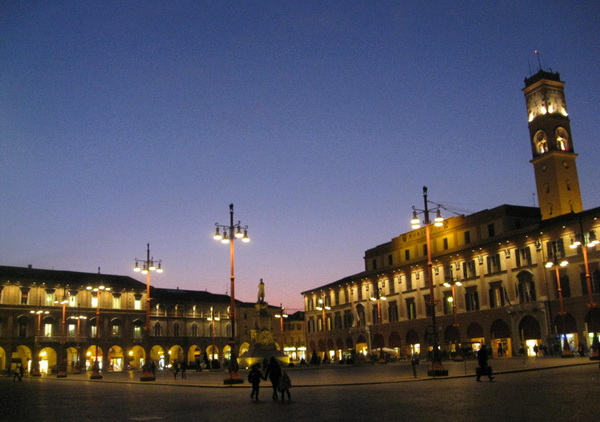
Forlì

Ancient era
The surroundings of Forlì have been inhabited since the Paleolithic: a site, Ca' Belvedere of Monte Poggiolo, has revealed thousands of chipped flints in strata dated 800,000 years before the present era, which indicates a flint-knapping industry producing sharp-edged tools in a pre-Acheulean phase of the Paleolithic.