Prehistory
Parma was already a built-up area in the Bronze Age. In the current position of the city rose a terramare. The "terramare" (marl earth) were ancient villages built of wood on piles according to a defined scheme and squared form; constructed on dry land and generally in proximity to the rivers. During this age (between 1500 BC and 800 BC) the first necropolis (on the sites of the present-day Piazza Duomo and Piazzale della Macina) were constructed.
Information and pictures about Italy, its history, monuments and events taken in the Peninsula with art exhibitions, theaters plays and concerts.
Wednesday, April 27, 2016
Wednesday, April 20, 2016
Alessandria
Alessandria was founded in 1168 with a charter as a free commune; it was sited upon a preexisting urban nucleus, to serve as a stronghold for the Lombard League, defending the traditional liberties of the communes of northern Italy against the Imperial forces of Frederick Barbarossa. Alessandria stood in the territories of the marchese of Montferrat, a staunch ally of the Emperor, with a name assumed in 1168 to honor the Emperor's opponent, Pope Alexander III. In 1174–75 the fortress was sorely tested by Imperial siege and stood fast. A legend (related in Umberto Eco's book Baudolino, and which recalls one concerning Bishop Herculanus’ successful defense of Perugia several centuries earlier) says it was saved by a quick-witted peasant, Gagliaudo: he fed his cow with the last grain remaining within the city, then took it outside the city walls until he reached the Imperial camp. Here he was captured, and his cow cut open to be cooked: when the Imperials found the cow's stomach filled with grain, Gagliaudo was asked the reason to waste such a rich meal. He answered that he was forced to feed his cow with grain because there was such a lot of it, and no room to place it within the city. The Emperor, fearing that the siege would last too long, left Alessandria free. (Malaria was probably the real cause of his departure.) A statue of Gagliaudo can be found on the left corner of the city cathedral.
Alessandria entered into jealous conflicts with the older communes of the region, in particular with Asti.
In 1348 Alessandria fell into the hands of the Visconti and passed with their possessions to the Sforza, following the career of Milan, until 1707, when it was ceded to the House of Savoy and henceforth formed part of Piedmont. The new domination was evidenced by the construction of a new big Cittadella on the left side of the river Tanaro, across from the city.
With Napoleon's success at the Battle of Marengo (1800), Alessandria fell to France and became the capital of the Napoleonic Département of Marengo. During this period another substantial fort was built to the north of the city containing impressive and substantial barracks which are still used as a military headquarters and stores (2006). The remains of a second fort to the south of the city (Cristo quarter) have been sliced in two by a railway (Forte ferrovia); a third one still remains in the middle of the same quarter (Forte Acqui).
From 1814 Alessandria was Savoyard territory once more, part of the Kingdom of Sardinia. During the years of the Risorgimento, Alessandria was an active center of the liberals.
In a suburb, Spinetta Marengo, the Battle of Marengo is reenacted annually, on June 14.
Alessandria was the first capital of an Italian province to be governed by a Socialist: the clockmaker Paolo Sacco was elected mayor on July 25, 1899.
Alessandria was a tactical military target during World War II and was subjected to intense Allied bombing, the most serious being the raids of April 30, 1944, with 238 dead and hundreds wounded, and April 5, 1945, with 160 deaths, among them 60 children from the children's asylum in Via Gagliaudo. On end of that month the city was liberated from the German occupation (1943–1945) by the partisan resistance and troops of Brazilian Expeditionary Force.
On November 6, 1994 the Tanaro flooded a good part of the city, causing major damage, especially in the Orti quarter.
Saturday, April 16, 2016
Toulouse-Lautrec, at the Museo dell’Ara Pacis in Rome
A major exhibition devoted to Toulouse-Lautrec, the quintessential bohemian painter of fin-de-siècle Paris, is opening at the Museo dell’Ara Pacis in Rome. The show features around 170 works from the Budapest Museum of Fine Arts, which span the artist’s career from 1891 to 1900, shortly before he died prematurely at the age of thirty-six.
Promoted by Roma Capitale – Capitoline Superintendency for Cultural Heritage, produced by Arthemisia Group and organized by Zètema Progetto Cultura, the exhibition brings to Rome the pick of the Toulouse-Lautrec Collection at the Budapest Museum of Fine Arts (Szépművészeti Múzeum) – one of the most important in Europe, with masterworks ranging from the Middle Ages to the 20th century. The Rome exhibition, curated by Zsuzsa Gonda and Kata Bodor, displays around 170 lithographs from the collection (including eight large-format posters and two covers of albums, each composed of about 10 lithographs, devoted to the French singer, actress and writer Yvette Guilbert), which will be on display at the Museo dell’Ara Pacis from 4 December 2015 to 8 May 2016.
The show is intended to give visitors a complete picture of Toulouse-Lautrec’s graphic output through posters, illustrations, sheet music covers and playbills, some of which are absolute rarities, since they were printed in signed and numbered limited editions with a dedication by the artist.
Henri de Toulouse-Lautrec is considered the most celebrated master of the print and poster in the Parisian Belle Époque period. One of the most distinguishing features of his art is his portrayal of the most diverse aspects of humanity in everyday or entertaining situations, which the French bourgeoisie found fascinating. He drew most of his inspiration from Montmartre in Paris, and the majority of his works depict the nightlife and popular haunts in this quarter. They are snapshots of the quotidian rendered with great immediacy. In next to no time he became one of the most sought-after illustrators and draughtsmen in Paris, receiving commissions for posters advertising plays, ballets and shows, and for illustrations that appeared in leading contemporary magazines like Le Rire.
In addition to the works of Toulouse-Lautrec, the exhibition includes rare photos and film clips from the beginning of the 20th century which evoke the Parisian Belle Époque. There is also an interactive app that enables the visitor to learn about lithography and printing techniques at the end of the 19th century, from colour and large-scale reproduction to the birth of the advertising poster, which Henri anticipated with his art.
THE EXHIBITION AND THE ARTIST
The exhibition is divided into five thematic sections that cover the great French painter’s formative artistic and intellectual experiences, from the first works executed under the guidance of his teacher René Princeteau, to those of his early period in Paris, which are strongly indebted to Montmartre and Léon Bonnat and Fernand Cormon. The trajectory begins with his realistic academic studies, develops through the humorous and avant-garde influences of the Artistes Incohérents, and culminates in the Post-Impressionist works executed after his encounter with Théo van Rysselberghe and the painting of Seurat, Gauguin and Van Gogh.
Section 1 – Parisian Nights
In 1881 Henri de Toulouse-Lautrec, scion of an ancient aristocratic family from the south of France, decided to become a painter. By then it had become quite clear that he could not follow in his father’s footsteps due to his genetic bone disease and his family agreed for him to continue his art studies in Paris. Henri easily fitted into the free, bohemian world of Montmartre where he not only found a home, but also themes to inspire his art. These included café-chantants and cabarets, the most popular haunts of fin-de-siècle Parisian night life (At the Moulin Rouge: La Goulue and her Sister, 1892; The Englishman at the Moulin Rouge, 1892; Caudieux, 1893).
Section 2 – The Stars
One of the most tangible and familiar signs of Toulouse-Lautrec’s cult of celebrity is the advertising poster featuring La Goulue, a dancer with a huge following, which he created for the Moulin Rouge in 1891.
The success of this first poster led to many other commissions, which brought him into contact with the most popular performers (Aristide Bruant in his Cabaret, 1893; Jane Avril, 1893; Divan Japonais, 1893). He became a good friend of the singer-songwriter and cabaret artist Aristide Bruant (1851–1925), whose image he helped to shape with a series of prints and lithographs, including Aristide Bruant in his Cabaret (1893), where the star is depicted wearing a voluminous cloak, wide-brimmed hat, and red scarf around his neck. The modernity of the stylized representations, composed of areas of solid colour, brought the artist unexpected overnight success.
The painter also established a friendship with the famous Parisian cabaret star Jane Avril (1868–1943), a sophisticate who appreciated his art, and portrayed her at a café-chantant in the poster Divan Japonais (1893). Jane Avril is also depicted as a connoisseur on the cover of L’Estampe originale, a publication in the form of an album promoting contemporary lithography (Cover for l’Estampe originale, 1893).
Section 3 – Women of the Night (I’ll take up quarters in a brothel … )
Toulouse-Lautrec liked the frivolity of brothels, indeed between 1892 and 1895 he often spent entire weeks in the maisons closes near the Opera and the Stock Exchange. He observed the girls for hours as they rested, played cards or applied their make-up. He liked to depict the lighter moments in brothels, and especially the prostitutes who did not make him feel ashamed of his stunted appearance. The complete lack of inhibition with which these women practised their profession made them the perfect models for him. This section includes the series of colour lithographs, Elles, of 1896, depicting intimate moments from the world of brothels with unusual empathy (Woman at the Tub; Seated Clowness; Mademoiselle Cha-U-Kao). Lautrec did not refrain from the subject matter of lesbian love, but treated it with special sensitivity (The Large Theatre Box, 1897).
Section 4 – In the Theatre (I don’t mind what is on. I always have a good time in theatre ... )
Between 1893 and 1896 Lautrec became an active participant of that exciting world of the theatre, designing programmes and portraying theatrical scenes (The Theatre Box with the Gilded Mask, 1893). He was captivated by Marcelle Lender, the actress of the Théâtre des Variétes, whose daringly erotic portrait bust printed in eight colours is a masterpiece in the history of lithography (Bust of Mademoiselle Marcelle Lender, 1895).
In his theatrical scenes the artist renders the intensity of the dramas or comedies with vigorous movements and powerfully contrasting light and shade, inspired both by Japanese woodcuts and Daumier’s images of theatre audiences (Princely Idyll, 1897).
Section 5 – Among Friends
The office and the homes of the editors of La Revue blanche were an important scene of Parisian social life. Here, Toulouse-Lautrec made several friends, and in 1895 he designed a poster for the magazine (Poster for La Revue blanche, 1895).
Although he experimented with new techniques, like drypoint, the influence of his early training and his fascination with natural elements and animals was always evident as his work developed. For example, horse-riding had been part of his aristocratic education as a youth, and it returned to the fore in his late period. This section sheds light on various aspects of Toulouse-Lautrec’s private life: his passion for the races at Longchamp (The Jockey, 1899), his daily outings in the Bois de Boulogne (Country Outing, 1897), and his love for an unknown woman sitting in a deckchair onboard a ship (The Passenger from Cabin 54, 1895).
The show is completed by the many book and cover illustrations that the artist created solely at the request of friends during his last years, including Cover for L'Etoile rouge (an anthology of poems by Paul Leclercq, one of the founders of La Revue Blanche) of 1898. The writer Victor Joze also asked him to do the cover for his novel (Cover for La Tribu d'Isidore, 1897) and Georges Clemenceau commissioned ten illustrations for the volume Au Pied du Sinai (1897), published in 1898.
This exhibition illustrates Toulouse-Lautrec’s eccentric art and nonconformist and provocative poetics – among the most sophisticated and groundbreaking of the fin-de-siècle period – through the works from the Budapest Museum of Fine Arts. He was a late discovery, but is now one of today’s most admired and appreciated artists.
“ ... my drawing was not too bad, because the competition was mediocre.” These words of Henri’s – possessed the soul of a “tormented artist” who was not duly “recognized”, despite the fact that he was extremely optimistic and aware of the beauty of life. An essential beauty whose outlines are deliberately blurred, to be experienced through debauchery; a beauty rendered with bold, unconventional tints and without any frills, where both drawing and colour are concerned. No one after Toulouse Lautrec has succeeded in rendering imperfection so “perfectly”. This is his style.
Wednesday, April 13, 2016
Venice
Although no surviving historical records deal directly with the founding of Venice, tradition and the available evidence have led several historians to agree that the original population of Venice consisted of refugees from Roman cities near Venice such as Padua, Aquileia, Treviso, Altino and Concordia (modern Portogruaro) and from the undefended countryside, who were fleeing successive waves of Germanic and Hun invasions. Some late Roman sources reveal the existence of fishermen on the islands in the original marshy lagoons. They were referred to as incolae lacunae ("lagoon dwellers"). The traditional founding is identified with the dedication of the first church, that of San Giacomo on the islet of Rialto (Rivoalto, "High Shore") — said to have taken place at the stroke of noon on 25 March 421 (the Feast of the Annunciation).
Wednesday, April 06, 2016
Foggia
The name Foggia derives from Latin "fovea", meaning "pit", referring to the pits where wheat was stored. Although the area had been settled since Neolithic times, and a Greek colony known as Argos Hippium (in Greek, Ἀργόριππα or Ἀργύριππόι) existed nearby, the first document attesting the existence of the modern city dates from 1000 AD. According to the legend, the first settlers were peasants who had found a panel portraying the Madonna, on which three flames burnt.
UNCOMMON PLACES an accelerationist aesthetics
![]() |
| UNCOMMON PLACES |
LUCA CAMPIGOTTO - OLAF OTTO BECKER - DAVIDE BRAMANTE -
JULIANE EIRICH - ANDREA GALVANI - HIROYUKI MASUYAMA
REGINE PETERSEN - ALVARO SANCHEZ-MONTAÑES
project by Manon Comerio
curated by Camilla Boemio
Palazzo da Schio
Via Capitano G. Sella 4 – Schio, Vicenza
dal 15 aprile al 15 maggio 2016/from April 15 to May 15, 2016
Palazzo da Schio, an unusual context but one overflowing with history and fascination, has become the venue for an analytical show resulting from the interaction between the project's originator, Manon Comerio, and thecurator-theoretician Camilla Boemio. The show aims at investigating the natural and urban landscape in another dimension: that of the imagination in a state of aesthetic acceleration. An imagination that, in the face of nature's display, searches for nothing from itself, nor does it search for a confirmation of its own certainties, but highlights ways for integrating multiple visions. We are living in an age of time without time, one in which images are superimposed to recount disorderly landscapes from which emerge parallel stories, vernacular elements, and allusions to geometrical-temporal aesthetic constructions. The hendiadys of Being and Time, to which Martin Heidegger had devoted his 1927 masterpiece, today seems to reveal itself in the disturbing form of an endless being without time. The legitimate child of the acceleration of historybegun with the Industrial revolution and by the French Revolution, thephenomenon of urgency was promoted, at a theoretical level, by theEnlightenment's enthusiasm for a future as the realisation of projects foremancipation and improvement. All the same, our postmodern age, one that has in fact stopped believing in the future, has not stopped hurrying, and has given life to a wholly self-referential version of urgency: a nihilistic version of it because it has been emptied of projects for universal emancipation and the promise of colonising the future.
The process of transcending the present is partly undertaken by our exhibition, with the narrative supplied by multifaceted works consisting of different scenarios: from the Broken Line and Ilulissat series by Olaf Otto Becker, to Regine Petersen with Find a Fallen Star, Luca Campigotto with a selection of landscape extracted from his well-known series, Davide Bramante's Saint Petersburg, the works specifically made for Italy by the Spaniard Alvaro Sanchez Montañes, a series of iconic works by Andrea Galvani, Hiroyuki Masuyama with a site-specific installation, and the German Juliane Eirich with a selection from her series Korea Diary and Itoshima.
Camilla Boemio è la curatrice di Diminished Capacity il Primo PadiglioneNazionale della Nigeria alla 15°.International Architecture Exhibition La Biennale di Venezia/Camilla Boemio was the curator of Diminished Capacity the first national pavilion of Nigeria at the 15th International Architecture Exhibition, the Venice Biennale.
Orari/Opening Hours:
Martedì al Venerdì dalle 10 alle 18 /Tuesday to Friday from 10a.m. to 6 p.m.
Sabato e Domenica dalle 10 alle 19/Saturday and Sunday, from10 p.m. to 7 p.m.
Wednesday, March 30, 2016
Pavia
Dating back to pre-Roman times, the town of Pavia, then known as Ticinum, was a municipality and an important military site (a castrum) under the Roman Empire. It was said by Pliny the Elder to have been founded by the Laevi and Marici, two Ligurian tribes, while Ptolemy attributes it to the Insubres. The Roman city most likely began as a small military camp, built by the consul Publius Cornelius Scipio in 218 BC to guard a wooden bridge he had built over the river Ticinum, on his way to search for Hannibal, who was rumoured to have managed to lead an army over the Alps and into Italy.
Wednesday, March 23, 2016
Agrigento
Agrigento was founded on a plateau overlooking the sea, with two nearby rivers, the Hypsas and the Akragas, and a ridge to the north offering a degree of natural fortification. Its establishment took place around 582-580 BC and is attributed to Greek colonists from Gela, who named it Akragas.
Akragas grew rapidly, becoming one of the richest and most famous of the Greek colonies of Magna Graecia. It came to prominence under the 6th-century tyrants Phalaris and Theron, and became a democracy after the overthrow of Theron's son Thrasydaeus. At this point the city could have been as large as 100,000 - 200,000 people. Although the city remained neutral in the conflict between Athens and Syracuse, its democracy was overthrown when the city was sacked by the Carthaginians in 406 BC. Akragas never fully recovered its former status, though it revived to some extent under Timoleon in the latter part of the 4th century.
Didrachm, 490-483 BC.
The city was disputed between the Romans and the Carthaginians during the First Punic War. The Romans laid siege to the city in 262 BC and captured it after defeating a Carthaginian relief force in 261 BC and sold the population into slavery. Although the Carthaginians recaptured the city in 255 BC the final peace settlement gave Punic Sicily and with it Akragas to Rome. It suffered badly during the Second Punic War (218-201 BC) when both Rome and Carthage fought to control it. The Romans eventually captured Akragas in 210 BC and renamed it Agrigentum, although it remained a largely Greek-speaking community for centuries thereafter. It became prosperous again under Roman rule and its inhabitants received full Roman citizenship following the death of Julius Caesar in 44 BC.
After the fall of the Western Roman Empire, the city successively passed into the hands of the Vandalic Kingdom, the Ostrogothic Kingdom of Italy and then the Byzantine Empire. During this period the inhabitants of Agrigentum largely abandoned the lower parts of the city and moved to the former acropolis, at the top of the hill. The reasons for this move are unclear but were probably related to the destructive coastal raids of the Saracens and other peoples around this time. In 828 AD the Saracens captured the diminished remnant of the city. They pronounced its name as Kerkent in Arabic; it was thus Sicilianized as "Girgenti". It retained this name until 1927, when Benito Mussolini's government reintroduced an Italianized version of the Latin name.
Agrigento was captured by the Normans under Count Roger I in 1087, who established a Latin bishopric there. They built the Castello di Agrigento to control the area. The population declined during much of the medieval period but revived somewhat after the 18th century. In 1860, the inhabitants enthusiastically supported Giuseppe Garibaldi in his conquest of southern Italy (in the course of the Unification of Italy). The city suffered a number of destructive bombing raids during World War II.
Thursday, March 17, 2016
I macchiaioli
The exhibition 'I Macchiaioli. Le collezioni svelate' (The Macchiaioli. The Collections Revealed) opens at the Chiostro del Bramante in Rome on 16 March and for the first time offers the public the chance to see important paintings by the Macchiaioli and others, within the context of the collections that originally held them.
The works that belonged to great collections of the past – for example those of Cristiano Banti, Diego
Martelli, Rinaldo Carnielo, Edoardo Bruno, Gustavo Sforni, Mario Galli, Enrico Checcucci, Camillo
Giussani and Mario Borgiotti – are now mostly in private collections and represent the core of the most important 19th-century Italian movement in painting.
The over 110 works on display are the gems of the rich collections of great art patrons of the period. They were extremely interesting personalities who shared a great passion for painting, entrepreneurs and businessmen in love with beauty, without whom we could never admire these masterpieces today.
Saturday, August 01, 2015
Veneto
Veneto is one of the twenty regions of Italy. Its population is about five million, ranking fifth in Italy. The region's capital and largest city is Venice.
Veneto, as part of the Republic of Venice, was an independent state for more than a millennium. Venice ruled for centuries over one of the largest and richest maritime republics and trade empires in the world. After the Napoleonic Wars and the Congress of Vienna, the Republic was annexed by the Austrian Empire, until it was ceded to the Kingdom of Italy in 1866, as a result of the Third Italian War of Independence. The Statute of Veneto describes Venetians as a "people".
Besides Italian, most inhabitants also speak Venetian. Having been for a long period in history a land of mass emigration, Veneto is today one of the greatest immigrant-receiving regions in the country, with 454,453 foreigners (9.30% of the regional population) in 2008, the most recent of which are Romanian and Moroccan.
Wednesday, July 01, 2015
Umbria
Umbria is a region of historic and modern central Italy. It is the only Italian region having neither a coastline nor a common border with other countries. It includes the Lake Trasimeno, Cascata delle Marmore, and is crossed by the River Tiber. The regional capital is Perugia. Umbria is known for its landscapes, traditions, history, artistic legacy, and influence on culture.
The region is characterized by hills and historical towns such as Assisi (a World Heritage Site associated with St. Francis of Assisi, the Basilica of San Francesco and other Franciscan sites, works by Giotto and Cimabue), Norcia (the hometown of St. Benedict), Gubbio, Spoleto, Todi, Città di Castello, Orvieto, Castiglione del Lago, Narni, Amelia, and other small cities.
Monday, June 01, 2015
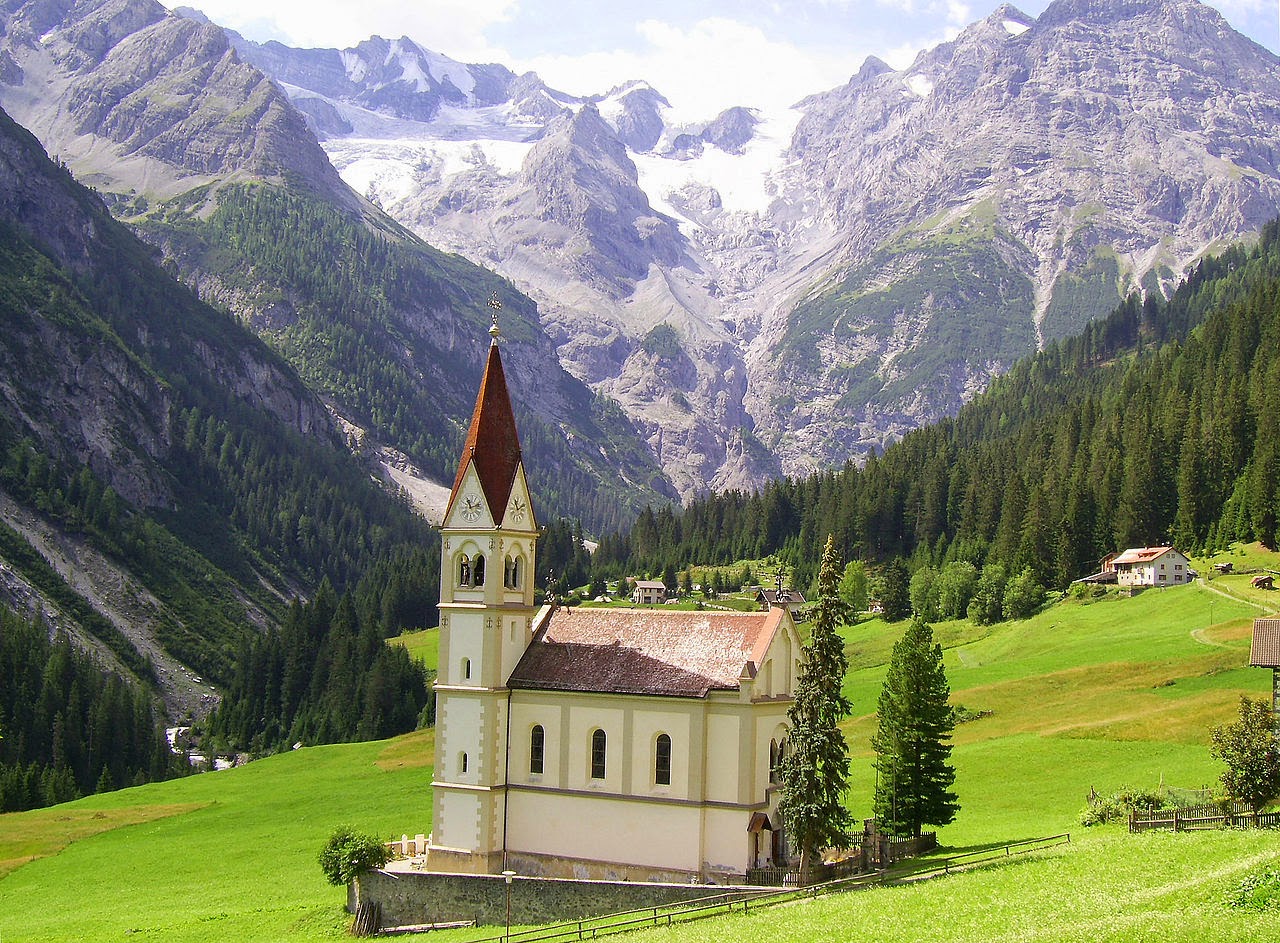
Trentino Alto Adige
Trentino Alto Adige is an autonomous region in Northern Italy. Since the 1970s most legislative and administrative competencies have been transferred to the two autonomous provinces which make up the region: Trentino and South Tyrol.
The region was part of Austria-Hungary and its predecessors, the Austrian Empire and the Holy Roman Empire from the 8th century until its annexation by Italy in 1919. Together with the Austrian state of Tyrol it is represented by the Euroregion Tyrol-South Tyrol-Trentino. With a past of poverty, the region is today among the wealthiest and most developed in both Italy and the whole European Union.
In English, the region is also known as Trentino-South Tyrol or by its Italian name Trentino-Alto Adige
Friday, May 01, 2015
Tuscany
Tuscany is known for its landscapes, traditions, history, artistic legacy and its influence on high culture. It is regarded as the birthplace of the Italian Renaissance and has been home to many figures influential in the history of art and science, and contain well-known museums such as the Uffizi and the Pitti Palace. Tuscany produces wines, including Chianti, Vino Nobile di Montepulciano, Morellino di Scansano and Brunello di Montalcino. Having a strong linguistic and cultural identity, it is sometimes considered "a nation within a nation".
Seven Tuscan localities have been designated World Heritage Sites: the historic centre of Florence (1982); the historical centre of Siena (1995); the square of the Cathedral of Pisa (1987); the historical centre of San Gimignano (1990); the historical centre of Pienza (1996); the Val d'Orcia (2004), and Medici Villas and Gardens (2013).
Tuscany has over 120 protected nature reserves, making Tuscany and its capital Florence popular tourist destinations that attract millions of tourists every year.
Wednesday, April 01, 2015
Sicily
Sicily is the largest island in the Mediterranean Sea; along with surrounding minor islands, it constitutes an autonomous region of Italy, and it is officially referred to as Regione Siciliana (Sicilian Region).
Sicily is located in the central Mediterranean. It extends from the tip of the Apennine peninsula, from which it is separated only by the narrow Strait of Messina, towards the North African coast. Its most prominent landmark is Mount Etna, which, at 3,350 m (10,990 ft), is the tallest active volcano in Europe and one of the most active in the world. The island has a typical Mediterranean climate.
The earliest archeological evidence of human dwelling on the island dates from as early as 8000 BC. At around 750 BC, Sicily was host to a number of Phoenician and Greek colonies, and for the next 600 years, it was the site of the Greek–Punic and Roman–Punic wars, which ended with the Roman destruction of Carthage. After the fall of the Roman Empire in the 5th century AD, Sicily frequently changed hands, and during the early Middle Ages, it was ruled in turn by the Vandals, Ostrogoths, Byzantines, Arabs and Normans. Later on, the Kingdom of Sicily lasted between 1130 and 1816, first subordinated to the crowns of Aragon, Spain, and the Holy Roman Empire, and then finally unified under the Bourbons with Naples, as the Kingdom of the Two Sicilies. Following the Expedition of the Thousand, a Giuseppe Garibaldi-led revolt during the Italian Unification process and a plebiscite, it became part of Italy in 1860. After the birth of the Italian Republic in 1946, Sicily was given special status as an autonomous region.
Sicily has a rich and unique culture, especially with regard to the arts, music, literature, cuisine and architecture. It also holds importance for archeological and ancient sites such as the Necropolis of Pantalica, the Valley of the Temples and Selinunte.
Sunday, March 01, 2015
Sardinia
Sardinia is the second largest island in the Mediterranean Sea (after Sicily and before Cyprus) and an autonomous region of Italy. The nearest land masses are (clockwise from north) the island of Corsica, the Italian Peninsula, Sicily, Tunisia, the Balearic Islands and Provence. The Tyrrhenian Sea portion of the Mediterranean Sea is directly to the east of Sardinia between the Sardinian east coast and the west coast of the Italian mainland peninsula.
The region has its capital in its largest city, Cagliari, and is divided into eight provinces. All local languages (Sardinian, Sassarese, Gallurese, Catalan Algherese and Tabarchino) enjoy "equal dignity" with Italian each in the concerned territory by a regional law.
Subscribe to:
Posts (Atom)